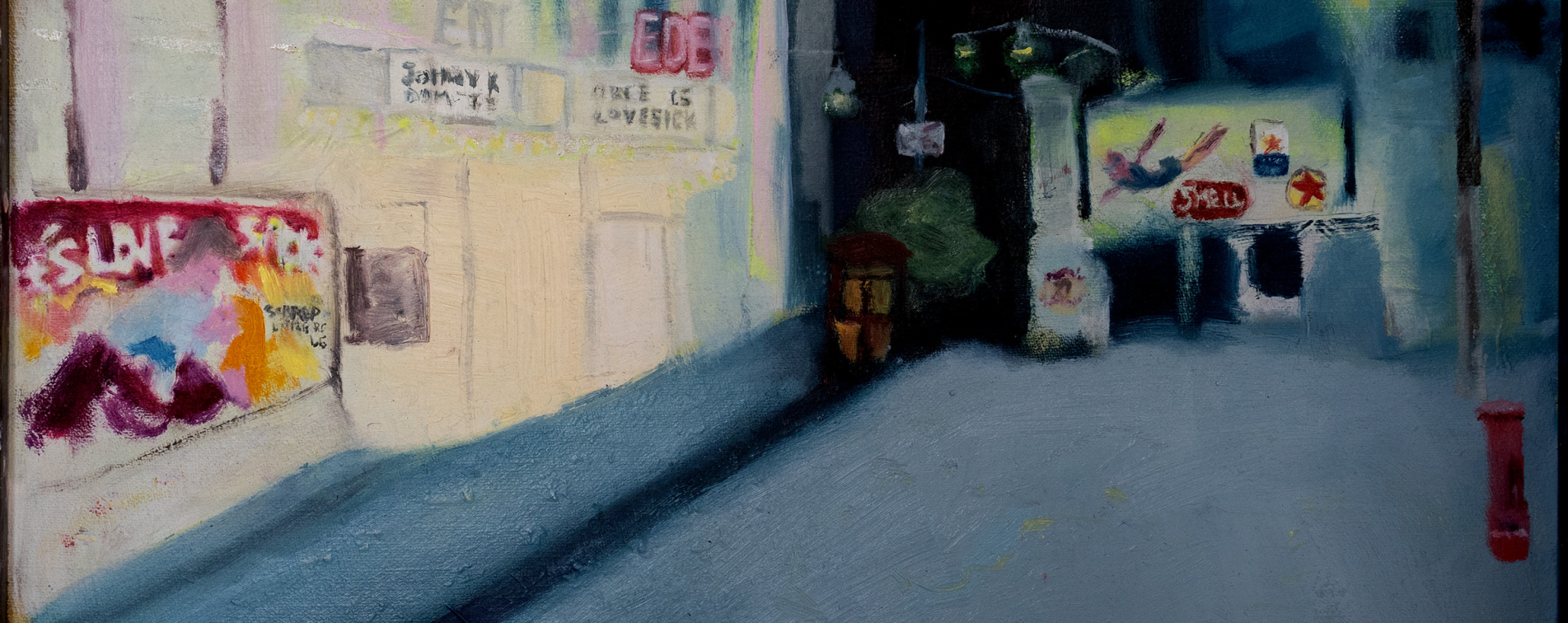
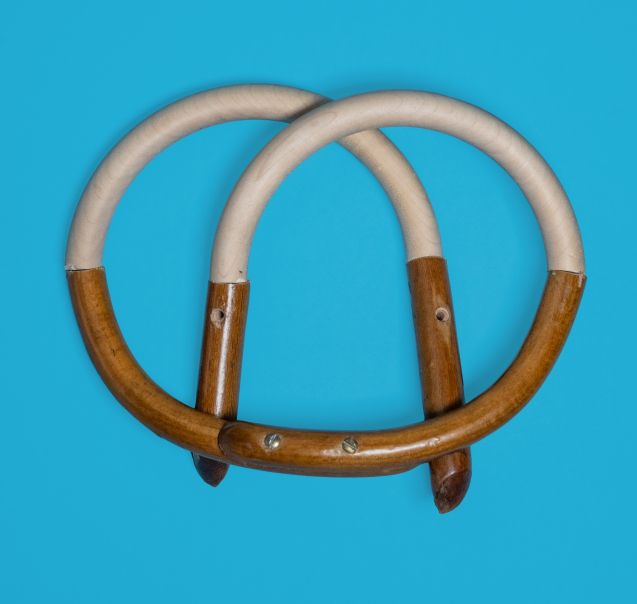
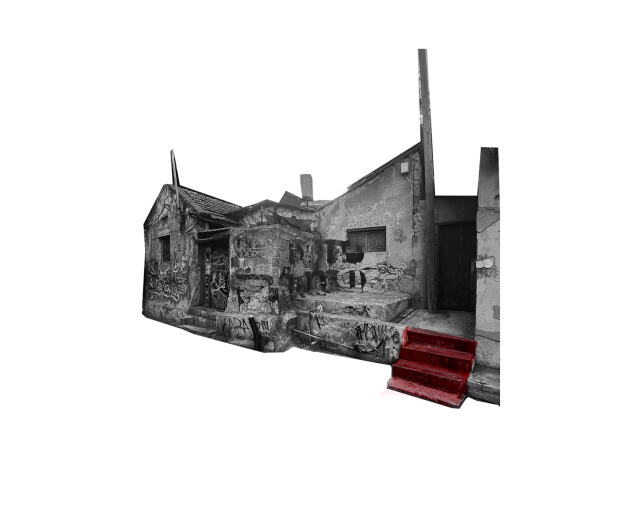
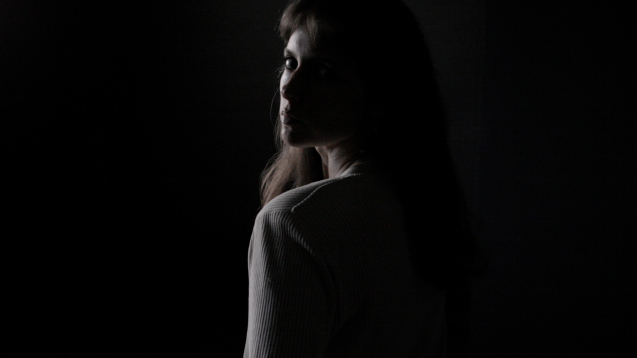
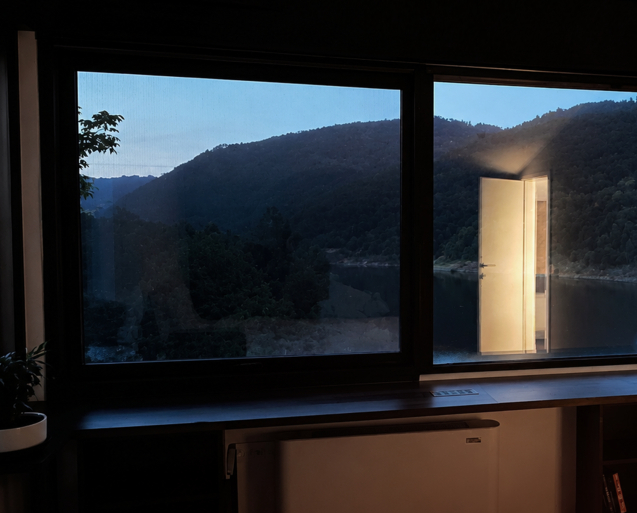
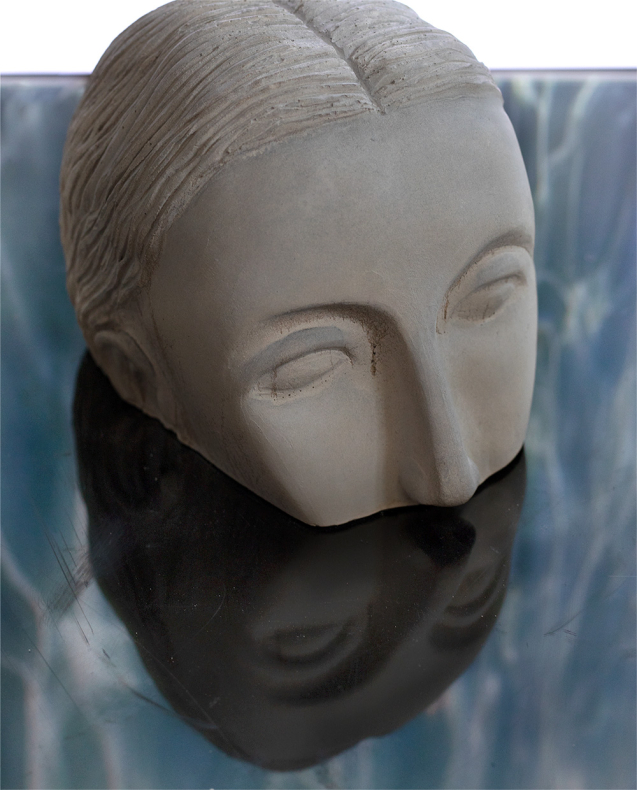
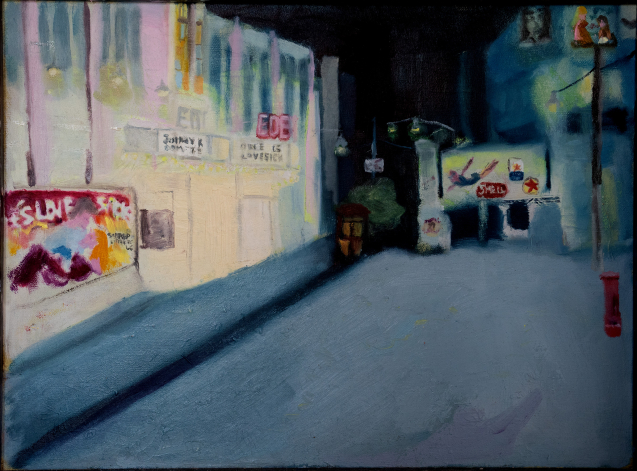
A black square on the wall.
Kazimir Malevich sought the “zero of form”; to sever painting from the world, from the object, from the landscape, from narrative.
The color black offered itself as a new point of departure, outside history.
We can no longer see black innocently.
Black has become saturated with time. Wars, destruction, death, loss, images that were etched into memory and disappeared, and images we can no longer stop seeing. What once sought to be pure abstraction now inevitably bears the immense weight of reality.
The seven-branched menorah emerges from the darkness. An ancient sign. But it has legs. At any moment, it can run for its life. Where is it running?
A curtain is drawn. Through a narrow opening, thousands of flickering suns burst forth, tiny flashes that can be grasped only fleetingly. The Galactic Peeping Tom.
Light and darkness cease to be opposites. Darkness may reveal, light may conceal. What lies in plain sight is not necessarily what the eye sees, and what it sees is not necessarily what it knows.
Faces appear from among cypress trees. A long finger rises to the lips: “Shhh.” Don’t tell anyone what you saw here.
Paper pulp, plaster, pins, gemstones, and epoxy keep the images in a liminal space between ornament and talisman, between the artificial and the magical. Imagined galaxies, pearl tears, and a whispering snake momentarily resemble signs left behind by an ancient civilization that may never have existed, or may have existed in a haberdashery.
The final scene of The Sopranos. Tony sits with Carmela and A.J. in the diner, while Journey’s Don’t Stop Believin’ plays in the background. Meadow runs toward the entrance. The bell above the door rings. Tony looks up. Black screen.