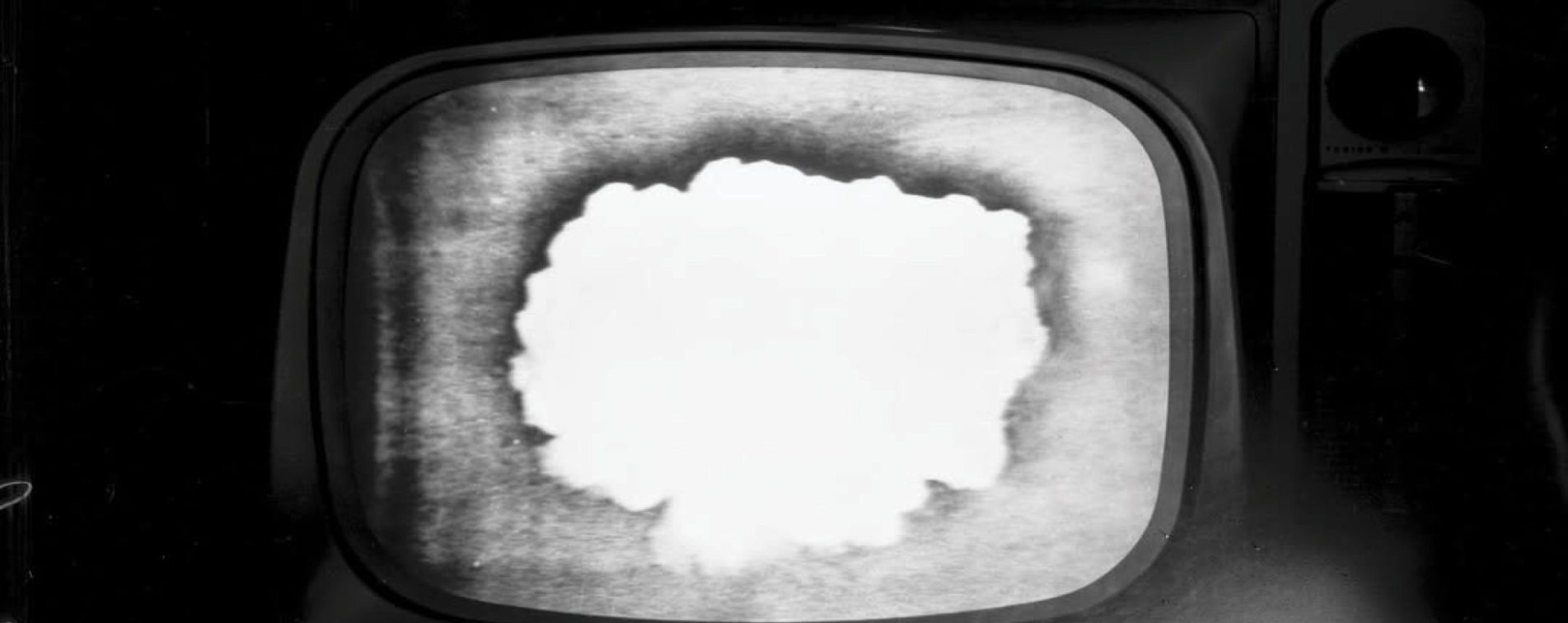
You are invited to the launch event of a new solo issue of Harama Magazine at Artport, featuring a talk-show conversation between Rinat Edelstein, founder and editor of the magazine, and Roy Menachem Markovich, creator of the issue TV WARS.
The event will take place in a studio interview format: an open conversation about television obsessions, struggles over visibility and screen culture, entertainment and catastrophe.
Throughout the evening, refreshments and cocktails created especially in response to the thematic world of the issue will be served.
Harama Magazine is an online journal dedicated to contemporary art. Over the course of its 13 years of activity, it has been unique in Israel in its commitment to presenting Israeli art online and placing the artworks themselves at its center. The magazine presents artworks across various media and serves as a platform for contemporary art in Israel, moving between more and less familiar works, between high and low culture, and making the most of the online medium in which it operates. The magazine aims to provide emerging artists with exposure and a space to present their work, alongside opportunities for established artists to present new and experimental works that have not yet been shown. Every artist featured in the magazine becomes part of a growing index of artists, which serves as an effective working tool for a wide range of professionals active in the Israeli art field.
Roy Menachem Markovich’s online solo exhibition TV WARS is part of an innovative format within the magazine, in which once a year an entire issue is dedicated to a single artist. This unique online format allows for an in-depth engagement with Markovich’s visual language, alongside a glimpse into the processes of thinking, deconstruction, and reconstruction that accompany his artistic practice.
Markovich’s exhibition emerged from the Israeli reality shaped by the war of October 7. In days when television became a loud yet silent member of the household, he examines the moment of our total surrender to the broadcast. Markovich acts as a detective of disruptions, searching for technological “accidents”, from glitches in news broadcasts to photographs of second-hand televisions for sale, in which the screen does not merely display the war outside but reflects its integration into the private living room, the sideboard, and the nearby houseplant. For him, the “accident” is not a malfunction but a moment of revelation, the moment when the mechanism is exposed and we stop being passive viewers and become active witnesses. The story Markovich weaves offers a clear-eyed look at the chaos of the past two years, not in order to mend the fractures, but to understand the structure of the reality reflected through them.
To view the issue.
Read more